

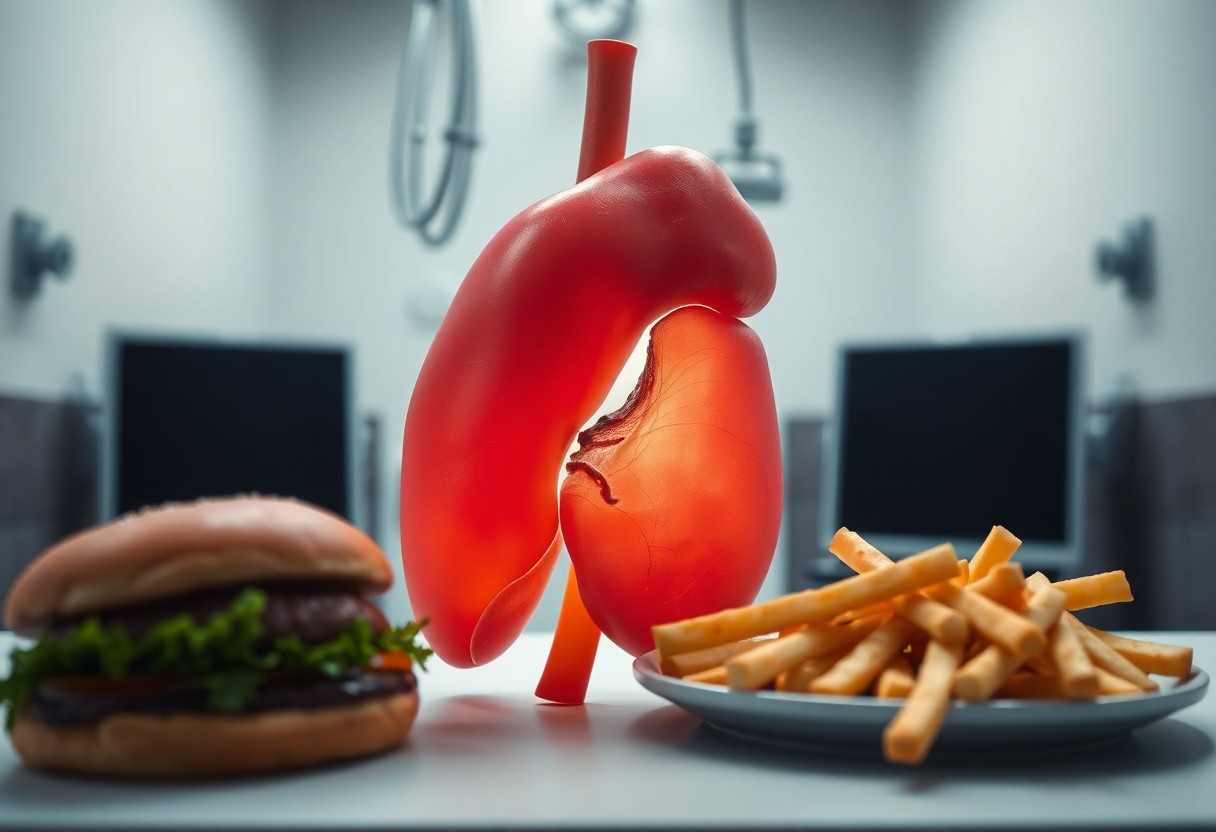
Fatty liver disease, also known as hepatic steatosis, involves the accumulation of excess fat in your liver cells, which can lead to serious health issues if left unaddressed. There are two main types: alcoholic fatty liver disease (AFLD) caused by excessive alcohol consumption, and non-alcoholic fatty liver disease (NAFLD) linked to various risk factors like obesity and poor diet. Understanding these conditions is vital for managing your liver health and preventing potential complications.
Your liver plays a vital role in processing fats and detoxifying your body. Fatty liver disease, or hepatic steatosis, occurs when excess fat accumulates in liver cells, potentially leading to more severe conditions like inflammation or liver failure. This condition is primarily categorized into two types: Alcoholic Fatty Liver Disease (AFLD) and Non-alcoholic Fatty Liver Disease (NAFLD), each with distinct causes and risk factors.
You might have fatty liver disease if excess fat builds up in your liver cells, affecting your liver’s ability to function properly. This condition can develop even if you consume little to no alcohol, leading to non-alcoholic fatty liver disease (NAFLD), which is becoming increasingly common due to lifestyle choices.
On a cellular level, fat accumulation in the liver results from a complex interplay between various factors, including your diet, metabolism, and overall health. Conditions like obesity, type 2 diabetes, and metabolic syndrome can disrupt the normal metabolism of fats, causing them to accumulate in liver cells.
Definition of fat accumulation mechanisms primarily revolves around an imbalance between fat influx and efflux in liver cells. Factors such as excessive dietary intake of refined carbohydrates and saturated fats can promote the buildup of fat. Simultaneously, conditions like insulin resistance can impede the liver’s ability to break down fat effectively. Other contributors include increased lipogenesis (fat synthesis) and decreased fatty acid oxidation, which together lead to higher fat levels in the liver, potentially resulting in fatty liver disease.
One of the primary classifications of fatty liver disease includes two distinct types:
Assume that understanding these types is the first step toward effective prevention and management.
| Type | Description |
| Alcoholic Fatty Liver Disease (AFLD) | Caused by excessive alcohol consumption |
| Non-alcoholic Fatty Liver Disease (NAFLD) | Occurs in individuals who consume alcohol |
| Risk Factors | Obesity, Type 2 Diabetes, deranged lipid profile metabolic syndrome |
| Complications | Can lead to inflammation, fibrosis, and cirrhosis |
| Treatment | Focus on lifestyle changes and monitoring |
For individuals who consume large amounts of alcohol, Alcoholic Fatty Liver Disease (AFLD) can occur when the liver becomes overwhelmed by alcohol. This toxicity disrupts the liver’s ability to metabolize fats, leading to fat accumulation. Early stages might not present symptoms, but continued alcohol use can result in more severe liver damage.
For those who do not drink alcohol, Non-alcoholic Fatty Liver Disease (NAFLD) can develop due to various risk factors such as obesity, metabolic syndrome, and type 2 diabetes. It is characterized by an abnormal buildup of fat in the liver, which can eventually progress to more serious liver issues if not addressed.
Disease progression in NAFLD can be gradual, often leading to non-alcoholic steatohepatitis (NASH) and potentially resulting in liver fibrosis or cirrhosis. Your risk is heightened by factors such as obesity and poor diet, making it important to engage in regular check-ups and make appropriate lifestyle changes to maintain liver health.
It’s imperative to understand the risk factors that contribute to fatty liver disease. Key causes include:
Recognizing these factors can help you take proactive steps towards liver health.
Risk factors related to your lifestyle play a significant role in developing fatty liver disease. These include:
Perceiving how these factors affect your health can lead to positive lifestyle changes.
While fatty liver disease can arise from lifestyle choices, certain medical conditions can elevate your risk. These include metabolic syndrome, type 2 diabetes, and abnormal cholesterol levels. If you have any of these conditions, your likelihood of developing fatty liver is significantly increased.
Factors such as high blood pressure, insulin resistance, and elevated triglycerides contribute to the likelihood of fat accumulation in your liver. Managing these medical conditions through regular check-ups and treatment is imperative for reducing your risk of serious liver complications.
Keep in mind that many individuals with fatty liver disease often do not experience symptoms in the early stages. However, as the condition progresses, you may notice some signs that warrant further investigation, making regular check-ups especially important if you are at risk.
Now, while you might not have noticeable symptoms initially, as fatty liver disease progresses, you could experience fatigue, discomfort in the upper right abdomen, unexplained weight loss, and jaundice, among other signs. Early detection is vital for effective management.
To confirm a diagnosis of fatty liver disease, healthcare professionals may use several methods, including blood tests, imaging techniques like ultrasound or CT scans, and sometimes a liver biopsy for more detailed information.
Understanding the diagnostic procedures is key to managing your liver health effectively. Blood tests can reveal elevated liver enzymes, suggesting inflammation or damage. Imaging studies help visualize liver fat content and assess any potential liver damage. In some cases, a biopsy may be recommended to determine the extent of the disease and rule out other conditions. Regular screenings are particularly important if you have risk factors such as obesity or diabetes, ensuring timely intervention and management of fatty liver disease.
Not addressing fatty liver disease can lead to serious health complications, including liver inflammation, fibrosis, or even cirrhosis. Effective management and treatment generally involve lifestyle changes prioritizing weight loss, a balanced diet, and regular exercise. You should also focus on monitoring and managing associated conditions, like diabetes and high cholesterol, to improve overall liver health.
Little adjustments in your daily routine can significantly impact your liver health. Incorporating a healthy diet rich in fruits, vegetables, and whole grains, along with regular physical activity, can help reduce liver fat. Aiming for gradual weight loss can further support your liver function and overall well-being.
Medical interventions may become necessary if lifestyle changes alone do not sufficiently address your fatty liver disease. Your healthcare provider might recommend medications to manage conditions associated with fatty liver, such as high cholesterol or diabetes. They may also suggest regular liver function tests to monitor your liver health effectively.
It is vital to work closely with your healthcare provider to determine the most appropriate treatments based on your individual case. In some instances, specialized medications may be needed to target specific metabolic imbalances contributing to liver fat accumulation. Regular follow-up appointments will help ensure that your treatment plan remains effective and tailored to your needs.
Unlike many other health issues, fatty liver disease can often be prevented through lifestyle changes. To reduce your risk, consider the following:
Any changes you make can significantly lower your chances of developing this condition.
Assuming you want to maintain liver health, focus on a diet rich in fruits, vegetables, whole grains, and lean proteins. Avoid foods high in refined sugars, unhealthy fats, and processed carbohydrates, as these can contribute to fat accumulation in your liver.
Tips for keeping your liver healthy through exercise include incorporating both aerobic and strength-training activities into your routine. Aim for at least 150 minutes of moderate-intensity exercise per week to help burn fat and improve overall health.
For instance, engaging in brisk walking, jogging, swimming, or cycling can effectively reduce liver fat and improve metabolic health. Additionally, adding strength training exercises, such as weight lifting or resistance bands, can further enhance your body composition and support your liver health. Make sure to consult your healthcare provider before starting any new exercise program.
On the whole, fatty liver disease is a condition characterized by the excessive accumulation of fat in your liver cells. It can manifest as either Alcoholic Fatty Liver Disease, resulting from excessive alcohol consumption, or Non-alcoholic Fatty Liver Disease, which is linked to factors such as obesity and metabolic syndrome. Understanding your risk factors and recognizing the potential health implications is vital for maintaining liver health, and adopting lifestyle changes can significantly improve your condition and prevent further complications.